The Importance of Changing Locks When You Move House
Why Replacing Your Locks Should Be a Top Priority After Relocating
Moving House? Don’t Forget to Change Your Locks
Moving into a new home is an exciting time, marked by new beginnings and fresh opportunities. Amidst the flurry of unpacking boxes, decorating rooms, and meeting new neighbours, one crucial task often slips down the to-do list: changing the locks on your new property. While it might seem like a minor detail, replacing the locks is a vital step in ensuring your family’s safety and peace of mind.
Security Starts at the Door
When you receive the keys to your new house, you can’t be certain how many copies exist or who might still have access. Previous owners, tenants, estate agents, cleaners, or even tradespeople could have keys that open your doors. By changing the locks, you take control of your home’s security from the very start, ensuring that only those you trust have access. I have lost count of the times that workers doing long jobs like extensions or renovations, lose keys. If you hand your key over to a tradesperson for an extended period, you simply don’t know if they or one of their employees makes a copy. Always give them a key to a minor use door if possible and change the lock once they have finished the work.
Peace of Mind for Your New Chapter
There’s nothing quite like the reassurance of knowing you’re the only keyholder. Changing the locks eliminates any risk of unwanted visitors and allows you to settle into your new home with confidence. The last thing you want during your first night in a new place is uncertainty over who might be able to let themselves in unannounced. I have actually known this to happen. After six months in their new house, a couple came home to find a neighbour looking around. The neighbour explained she had a key from the previous owner and was concerned because she had been watching the new owners and they had not returned at their normal time.
Insurance and Legal Considerations
Many home insurance policies require evidence of forced entry to cover burglary claims. If a break-in occurs and the thief uses an old key, you may find yourself ineligible for compensation. By replacing the locks, you not only protect your belongings but also ensure your insurance remains valid and effective. There are also an incredible number of older properties that simply do not have insurance rated locks. It is always best to seek professional advice. Many people confuse the locking mechanism on a upvc door for a 5 lever lock as stated in insurance policies.
When Should You Change Locks?
Ideally, locks should be changed as soon as you move in – before you start bringing in valuables or spending the night. If you’re renting, check with your landlord about replacing the locks, and ensure you comply with the tenancy agreement. For homeowners, it’s a straightforward process that can often be done in a single afternoon. As a tenant, it is worth offering to pay for new locks if the landlord won’t do it. Legally, they don’t have to, but morally your landlord should change the locks for you. This is an allowable expense, so no-one loses out. If you are a home buyer and intend to have work done quite quickly, either leave the lock changing until after the work is done or ask your local locksmith if they have some 2nd hand locks that can go in temporarily before the main change further down the line.
Professional Help or DIY?
While some may feel comfortable changing locks themselves, hiring a professional locksmith guarantees the job is done correctly and to a high standard. A reputable locksmith can also advise on upgrading to more secure or modern locking systems, offering an added layer of protection against break-ins. You might want to discuss smart locks or just get some advice.
Don’t Overlook Windows and Outbuildings
It’s easy to focus on doors, but remember to check and, if necessary, change locks on windows, garages, sheds, and side gates. These entry points are just as important for your overall security. A comprehensive approach ensures no weak links in your home’s defenses. When you move in, check all windows have a lock and key and that they operate correctly. Getting everything done in one go will save the cost of repeat visits in the future.
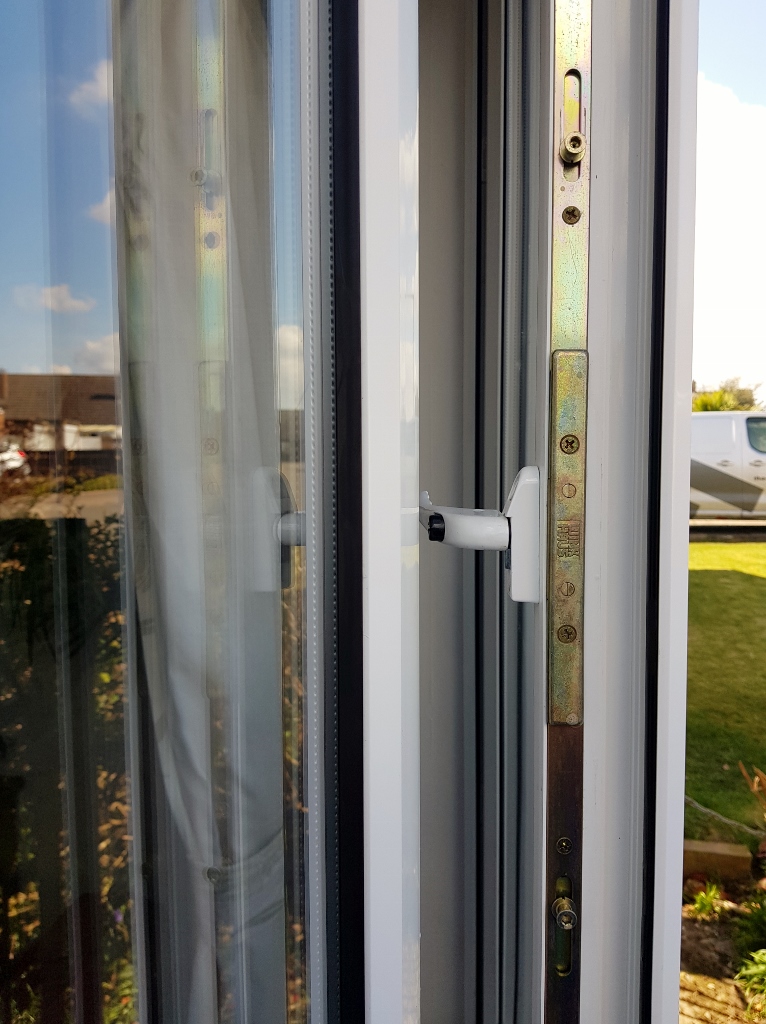
Wndow shuts & mechanism cleaned & serviced
Final Thoughts
In the whirlwind of moving house, changing the locks might seem like a small detail, but it’s one of the simplest and most effective ways to protect your loved ones and your possessions. By making this a priority, you’ll be able to enjoy your new home safe in the knowledge that you’re in control of who comes and goes.
After all, home is where you should always feel secure. Don’t leave it to chance—change your locks and start your new adventure the right way.
(OK, maybe not THE perfect Christmas present – but definitely something to think about!)
Practical, Thoughtful, and Full of Meaning
When it comes to choosing the perfect Christmas present, most of us find ourselves stuck between the latest gadgets, novelty jumpers, or a box of classic chocolates. But sometimes, the most memorable gifts are the ones we least expect. This year, why not consider breaking tradition and giving the gift of security, privacy, and peace of mind? Here’s why a lock could be the perfect Christmas present for your loved ones.
1. A Symbol of Security and Care
Christmas is all about showing the people in your life that you care. Gifting a lock—whether for a home, bicycle, locker, or suitcase—reflects your concern for their safety and well-being. It’s a gesture that quietly says, “I want you and your belongings to be safe,” and that’s a sentiment that will be appreciated long after the festivities are over.
2. A Practical Present They’ll Actually Use
Let’s be honest: how many presents end up collecting dust in a drawer by January? Unlike some novelty gifts, a lock is something people actually need. From safeguarding bikes on the daily commute to securing precious memories in a diary or jewellery box, a good lock is the gift that keeps on giving. With so many styles available—padlocks, smart locks, combination locks—there’s one to suit everyone’s needs.
3. Suitable for All Ages and Lifestyles
Locks are versatile gifts for all generations. Children might need a sturdy padlock for their school locker, while teenagers could use a lock for their gym bag. Adults will appreciate a reliable bike or door lock, and seasoned travellers will love a TSA-approved luggage lock. No matter the age or lifestyle, everyone has something worth protecting.
4. Encourages Good Habits
Giving a lock as a present isn’t just about the item itself—it’s about encouraging responsibility and good habits. For children and teens, it’s a gentle nudge towards looking after their possessions. For adults, it can be a timely reminder to update security, whether at home or on the move.
5. Personalisation Adds That Special Touch
Locks may seem utilitarian, but they can also be deeply personal. Many locks can be engraved with a name, a special date, or a message. Imagine the delight of receiving a padlock with a heartfelt engraving, perhaps to commemorate a special Christmas or a new home. It transforms a simple object into a keepsake.
6. Affordable Yet Meaningful
The festive season is not just about grand gestures; it’s the thought that counts. Locks are typically affordable, making them a brilliant choice for stocking fillers or Secret Santa gifts. Yet, their meaning runs deeper than their price tag, offering both practicality and sentiment in one neat package.
7. A Nod to Tradition (With a Modern Twist)
In some cultures, locks are exchanged as tokens of love and longevity—think of couples attaching padlocks to bridges as symbols of enduring affection. Gifting a lock this Christmas gives a nod to those traditions, while also embracing the latest in security technology, from fingerprint padlocks to smart door locks.
Conclusion
So, if you’re on the hunt for a Christmas present that’s practical, meaningful, and sure to be appreciated, look no further than a lock. It’s a gift that says “I care,” and offers peace of mind all year round. After all, isn’t that what Christmas is all about?
Changing Locks When You Move – and why it’s important
Securing Your New Beginning
Moving into a new home is an exciting experience, filled with possibilities and the fresh promise of a new start. Amidst the bustle of packing, unpacking, and redecorating, one critical step is often overlooked: changing the locks on your new property. While it may seem like a minor detail, changing the locks & updating them is an essential measure for protecting your home, belongings, and loved ones.
Why Changing Locks Matters
When you take ownership of a new home—be it a flat, house, or even a let property—you can never be entirely certain how many sets of keys are in circulation. Previous owners, tenants, estate agents, cleaners, builders, and even neighbours might still have a copy. By changing the locks, you establish control and peace of mind, knowing exactly who has access to your property.
Protecting Your Family and Belongings
Your new home is likely filled with personal possessions, treasured items, and, most importantly, the people you care about. Failing to change the locks leaves you vulnerable to uninvited guests. Burglaries and unauthorised entries are often crimes of opportunity; ensuring your locks are unique to you greatly reduces the risk.
Meeting Insurance Requirements
Many insurance policies require evidence that the property has secure locks, and some may void claims if it’s discovered you did not change them after moving in. By updating your locks, you not only strengthen your home’s defences but also ensure you’re meeting the terms and conditions of your insurer—potentially saving you a headache should you ever need to make a claim.
Peace of Mind
There’s no substitute for the peace of mind that comes from knowing your home is secure. Sleeping soundly in your new surroundings is easier when you know you’ve taken proactive steps to protect your household. It’s a simple one-off task that can save you worry and stress down the line.
Don’t Forget Internal and Outbuildings
While the front and back doors are obvious priorities, don’t overlook other access points. Garages, sheds, garden gates, and even internal doors may also require updated locks—particularly if they provide access to valuables or private areas.
How to Change Your Locks
Contact a reputable locksmith who is approved by a recognised trade association.
Consider upgrading to more secure lock types, such as anti-snap cylinders or smart locks.
Retain control of all new keys, and only provide copies to trusted individuals.
Dispose of old keys securely to prevent them falling into the wrong hands.
Conclusion
Changing the locks is a simple, affordable step that makes a world of difference to your home security. As you settle into your new home, make lock replacement a top priority—it’s a small investment in your safety, comfort, and peace of mind. After all, your new chapter deserves to start on the right foot: safe, secure, and truly yours.
This week I have been to three properties to replace mechanisms that have cost the customers a lot of money. In all three cases, the cost could have been avoided with very easy door maintenance. Doors with multipoint locking mechanisms have various bolts, hooks and/or rollers. When they have bolts at the top and bottom going up and down, the one going down is the problem. A bolt going down means a hole in the floor for that bolt to go in to and thanks to Newton and his pesky discovery of gravity, a hole going down gets full of lots of things you don’t want, from small stones to compacted dirt over a long period of time. Taking seconds to hoover any floor holes around doors every time you vacuum your floors can potentially save you a rather large locksmith bill. If you have allowed these holes to fill, digging out any compacted grit with a screwdriver first will be a good start.
Another culprit that can cost money comes in the form of six legs. If you have wood doors with multi-point locks and no top and bottom bolts, insects have a habit of nesting behind the mechanism. Here is an image of one I removed this week.
That nest material sets rock hard and breaks the mechanism. You can usually tell if you have nesting insects by leaving the door wide open (usually outward opening doors) and watching to see if the parent swoops in or out. If they do, get someone like me to clear out the nest before it becomes a problem. If not, then regularly treat the area with (preferably Eco-friendly) repellents.
The last big problem of the summer is the heat. Plastic doors in particular (but wood doors as well), contract and warp in the heat. If your door is difficult in the morning sun, It may be OK again in the cooler evening when the sun is not shining directly on it. The parts to really watch here are hooks. If a plastic door warps, or a wooden door contracts too much, the hooks might separate too much to engage properly into the holes they go into. Trying to force them is likely to break your mechanism, When this happens you will need either a locksmith or door fitter to come along and adjust your hinges.
If you are having any issues with multi-point door mechanisms, please do not hesitate to contact me.
Multipoint locking doors are increasingly popular in homes and commercial properties due to their superior security features. With locks engaging at multiple points along the frame, these doors offer enhanced protection from break-ins and better sealing against external elements. However, like any mechanical system, they require regular maintenance to ensure optimal performance and longevity. Below is a thorough guide on how to maintain these complex yet valuable systems.
Understanding Multipoint Locking Systems
Before delving into maintenance tips, it’s essential to understand what a multipoint locking system entails. These systems typically feature three or more locking points, which simultaneously engage when the door handle is lifted or turned. The locking points often include the main latch, deadbolt, and additional hooks or bolts along the edge of the door.
Why Maintenance Matters
Multipoint locking systems are key to your door’s security and efficiency. Proper maintenance ensures:
Consistent functionality: Prevent stiff mechanisms or misaligned locks that compromise security.
Prolonged lifespan: Reduce wear and tear by addressing minor issues before they escalate.
Enhanced energy efficiency: Maintain proper sealing to prevent drafts and energy loss.
Routine Maintenance Tips
1. Regular Cleaning
Dust and debris can accumulate inside the locking system, hindering smooth operation. To clean:
Use a soft cloth to wipe down the exterior parts of the lock.
For internal components, employ a dry brush or compressed air to remove dust.
Avoid using water or harsh cleaning agents that could corrode metal components.
2. Lubrication
Proper lubrication is vital for keeping the locking mechanism smooth and functional.
Apply a silicone-based lubricant or specialist lock lubricant to all moving parts, such as latches, hooks, and bolts.
Avoid oil-based lubricants, as they can attract dirt and create a sticky residue.
Conduct lubrication every six months or as needed, depending on use.
3. Inspect Alignment
Misalignment can cause difficulty in locking or closing the door. Check for:
Uneven gaps between the door and frame when closed.
Strain or resistance when engaging the locks.
If misalignment occurs:
Adjust the strike plates on the frame using a screwdriver.
Ensure the door hinges are tightened and properly aligned.
4. Check for Wear and Tear
Over time, components of the locking system may wear out. Inspect for:
Cracks, rust, or deformities in the locking points.
Loose screws or bolts in the assembly.
Handle mechanisms that jiggle or feel unstable.
Replace damaged parts promptly to avoid compromising the entire system.
Advanced Maintenance Practices
1. Professional Inspection
While routine checks are beneficial, a professional locksmith or technician can perform a detailed inspection of your multipoint locking system. Annual inspections can:
Identify hidden issues, such as internal wear or corrosion.
Provide adjustments that require specialised tools or expertise.
2. Replacing Components
If your locking system shows signs of significant damage or is consistently malfunctioning, it may be time to replace individual components. This may include:
Worn-out handles or levers.
Damaged locks or strike plates.
Hooks or bolts that no longer engage correctly.
Ensure replacements are compatible with your existing system to maintain effectiveness.
Best Practices for Long-Term Care
1. Avoid Excessive Force
Never force the door handle or locks if they resist movement. Doing so can cause damage to the internal components. Instead, investigate and resolve the issue.
2. Protect Against Moisture
Multipoint locking systems are susceptible to rust caused by moisture. Protect your locks by:
Installing weatherstripping to minimise exposure to rain or humidity.
Avoiding water-based cleaning methods.
Applying anti-corrosion spray to exposed metal parts.
3. Use the Locks Regularly
Engage the locks frequently to ensure all components remain active and functional. Prolonged inactivity can lead to stiffness or mechanical failure.
Common Mistakes to Avoid
1. Neglecting Routine Checks
Skipping inspections can allow minor issues to worsen over time, leading to expensive repairs.
2. Using Incorrect Lubricants
Oil-based products can cause dirt buildup, reducing the efficiency of the locking mechanism.
3. Ignoring Signs of Damage
Failing to address visible wear or malfunction may compromise security and lead to system failure.
Conclusion
Multipoint locking doors provide unmatched security and efficiency, making them a valuable asset to your property. By implementing regular maintenance practices, such as cleaning, lubrication, alignment checks, and professional inspections, you can ensure the system operates smoothly for years to come. Avoid common mistakes and stay vigilant for signs of wear and tear—your diligence will pay off in improved safety, energy efficiency, and the longevity of your door system. Proper care is not just an investment in your security but also a guarantee of peace of mind.
Should you have any questions regarding the above, please do not hesitate to contact me.
No, I’m not talking about locks linked to your smart speaker. As world events make everything more expensive I’m talking about ways to shop smart. I thought this as recently I upgraded the security on a home in a local new build estate. Soon, I had a neighbour asking on recommendation for the same upgrade. That turned into five properties, all occupied by people who knew each other. For me, it was multiple journeys to the same area, multiple measuring visits, multiple ordering from my supplier and multiple deliveries. Had these people clubbed together, I could have done all the work in one day. I would have measured up all the properties on the same day beforehand, thus saving myself costs that I would have passed on to the customer. Those customers could have saved themselves £50 each by clubbing together on the labour charge.
Home security is important, but like everything else, the cost is rising. So if you are thinking of upgrading your locks, putting in some CCTV or an alarm, talk to your friends, If they are local, I will happily split a labour fee between you if it means I save on massive fuel bills. I will visit both your homes (or more) for free security checks, tailor the hardware recommendations personally and then when the work is done, split the labour cost evenly between you.
What about giving security as a gift? We all know a relative that might have outdated locks, don’t we? Well, why not club together with family members and buy them a security upgrade? (It could make a nice change from pants and socks or bathroom smellies.) You would be getting them something they would be using every day for a long time to come. On my rounds, I see so many older folk struggling with doors that have floppy handles or need a ‘knack’ to make the key work. Next time you visit Mum and Dad, plan something worthwhile for their next birthday or Christmas.
And just in case you were wandering how far this locksmith will travel, I am happy to come to you in North Walsham, Aylsham, Fakenham, Cromer, Stalham, and all the places in between. I even venture into Norwich.
My security checks are always free and there is never an obligation to take up my quote. 1st homes or 2nd homes, holiday lets or commercial properties, your security is my business.
Smart Locks – Again! I am having a growing number of people asking me for help with smart locks they are buying for themselves. Many of you are expecting simple installation (as advised by the manufacturers) only to find things a bit more complicated than you might expect. The same can be said for some smart doorbells and supposedly easy installation security equipment like smart CCTV and alarms.
Smart security is still a young technology. Smart locks can decrease your security level and even make your insurance void in many cases. A lot of smart locks are aimed at an American market and their lock requirements are not as stringent as ours.
Smart locks are not always more convenient than key operated locks either. With a key operated lock, you take your key out of your pocket as you approach your door, and you are in without thinking about it. With a smart lock, you might have to carry a tag (easier to break than a key) or you might have to get out your phone, wait ages for the phone to recognise your face/thumbprint/pin code, find the app, open the app and then find the unlock button within the app.
Smart doorbells/doorcams can take loads of footage and send you endless emails of people passing your property but not actually approaching your door, or better still the spider web spun overnight and blowing in the breeze, setting off the sensor. You have to weigh up the options of battery (not good if your door opens onto a busy street) versus mains power (might need long wires or an electrician to wire it in safely).
Your smart CCTV might not be able to tell the difference between a small dog and a human, in which case you are going to be poring through hours of watching what Fido was doing while you were out all day while Fido himself is desperately waiting for you to take him walkies!
And smart alarms can be much better than you thought. Would you like your elderly Mum to just have an alarm for when she goes out to the shop, or would you like a system where if she takes a fall, she can press a button on a neck loop and the alarm system not only calls you, but lets you speak two-way to asses the potential emergency. Do you want your alarm system to incorporate a smoke detector and CO2 detector. Which virtual assistant device do you want it to be compatible with? Do you want it easy to take with you to a new property? Do you want it future proof or easy to do add-ons in order to keep the initial cost down?
There are so many things to think about when buying smart security products and they are rarely as easy to install as their blurb would have you believe. Any decent locksmith/security installer will provide you with free advice and quotations. You should always consult a professional before purchase. Not the person in the shop, but a person who installs and knows the pitfalls.
If you have any questions regarding the above information, please do not hesitate to contact me via email or phone 07846643176
Besides your mobile phone, what is the most important thing you carry around with you every day? Very few people even think about their keys, but without them you cannot function. Be it getting into your home or office, or starting your keys are always needed. So when was the last time you bothered to look at your keys, clean them even, or check that they were not bent or damaged in any other way?
A lot of locks fail because the keys being used to operate them are worn, damaged or badly cut copies. I’ve seen people try their best to service their own locks, but then fail to keep the actual keys clean. We know toddlers love to put keys in their mouths and we snatch those keys away because we know they are dirty, but we never even give those grubby, bacteria ridden lumps of metal so much as a quick scrub to remove surface dirt.
The bodies at the top of the locksmithing industry in the UK suggest that we locksmiths should tell you to change your locks every 5 years, one of the main reasons for this is that people just do not maintain their locks, or they use too many copies that are cut poorly. So here are my top tips for keys:
1. Keep your keys clean. I know it is obvious, but I see loads of grubby keys, especially in the work place or where anyone needs a big bunch of keys. Dirt and grime collects in the grooves, which is then transferred into the lock where it builds up, wearing away the internal moving parts. Hot, soapy water and a stiff nail brush should get rid of the worst of it and be sure to dry the key straight away so as to avoid rust.
2. Only take the keys you need. Big bunches of keys just rub against each other and generally wear away. If you have mortice (Chubb) keys with thin prongs, those prongs are likely to get bent far easier when the keys are on a big bunch. Separate your keys into smaller bunches for use when you need them. This will also keep the keys cleaner.
3. Don’t get too many copies made. Any more than four keys is going to be more expensive than a basic keysafe. If you run a business, giving staff members the code to the keysafe that can be changed is a lot better than chasing them to return their key when they leave, and if they leave under nefarious circumstances, you might have to change your locks when they don’t return their key. A keysafe just requires changing the code to the keysafe. It also saves a load of bad copies wearing out the lock quicker.
4. Having said that, do not let your stash of keys run down to just the one, especially if that one is a copy. You should always be in possession of a branded original key for the lock. All locks come with at least two keys. If you only have one, not only are you going to be in trouble when you eventually lose it, but that means there is at least one other key in someone’s possession who can gain access to a door you want to secure, be it your home or workplace.
5. If you need to get copies made, always keep the originals as primary use. Just the other day, I attended a job in Blakeney where the lock wasn’t opening or locking on one side. I asked the customer to fetch me the original keys which worked just fine. Your original branded keys are the most important. Treat them with the utmost care. If you need to change your locks, think about how many keys you might need and get you locksmith to order them with your new lock.
6. If you must keys cut at a later date, shy away from chain outlets. They have a higher turnover of staff who are not always trained to high standards. Your local engraver/cobbler will be running their own business and will more likely have years of experience. But, they will not often have genuine branded blanks. Be prepared to demand genuine branded keys, even if that means coming back a few days later and paying more for the keys. The key cutter will take even more care to cut the key perfectly as they will not want you coming back with a bad cut key. It will cost them more to honour a guarantee of a good cut if the blank is branded.
7. As said above, any more than four keys should be negated by a basic keysafe, but it is worth investing in a high quality keysafe. Dial keysafes are easier to change the codes on, so perfect for holiday lets, etc, but push button keysafes are more secure and so better for the home where you might not need to change the code too often. Keysafes should be positioned near the door the key inside is going to open, but not on general view if avoidable. If you can position in a corner, or make the angles difficult for levers or hammers, then even better, but most burglars ignore keysafes as they can usually find easier ways in.
8. Many new high security locks are coming with special keys. At least one brand uses a magnet in the key. From personal experience, I can tell you not to have these keys anywhere near vehicle keys as the small magnetic field can scramble the signal between car and car key transceiver.
9. If you have a digital safe, hand the override keys to a trusted friend or family member. There is no point keeping the keys in the house where the burglar might find them. But do not keep the keys inside the safe – they will be useless to you if the batteries fail. If you only have a manual key safe, again give one of the keys to a friend or family member and ensure the second key is not left in the home while you are out.
10. The glove compartment is not the place for your spare car key. The only person who can possible benefit from the key being there is the car thief.
11. If you drive to your holiday destination and it is more than a hundred miles from home, take the spare key to the car. Leave it in the holiday accommodation, because there is nothing worse than having to call a locksmith knowing you could get in yourself if you had the spare nearby.
12. If you have a special knack for unlocking your door, or you have to hold the key at a certain angle, either the key or your lock is not right. Check the key before any further damage is done. If it’s not the key, then change the lock before it fails completely just before you need to be in and out for an important event.
If you have any questions regarding any of the points raised above or in any of my other blogs, please contact me through any of the channels mentioned on my contacts page. (Text gets fasted response).
What I have learned after 10 years as a Locksmith?
Lessons 10 years as a locksmith has taught me:
1. The multipoint locking mechanism on a double glazed door (or any door where you lift the handles before locking) is NOT a five lever lock. Five levers refers to the internal levers in a mortice lock which sits inside a wooden door.
2. All of those hooks, bolts, mushrooms, and rollers on a lift handle door mean nothing when burglars can attack the lock barrel easily. Having the correct barrel is vitally important and while you might get the insurance company to reimburse your financial loss, they cannot replace the heirloom given to you by Grandma that has enormous sentimental value. If your locking barrels do not have British Standard kite marks, you are practically inviting burglars into your home.
3. Home security is not necessarily about keeping intruders out. We all know they can smash a window. But they do not want to leave through that window carrying your stuff. You are looking to make it as hard as possible for them to leave with their arms full.
4. Look at your neighbour’s house when thinking about home security. Your aim should always be to make them look like an easier target. Crunchy gravel, CCTV, alarms, sensor lights are instant barriers before they even reach your door. Burglars recognise good locks and will go elsewhere. Your local locksmith knows the best brands you can’t buy on the high street.
5. That sneaky place you hide a spare key in the garden is glaringly obvious to the burglar. You are much better off with a quality keysafe.
6. You do not need multiple keys for carers. A keysafe can be much cheaper and easier for all. No more worries when keys go missing.
7. A home safe is not just about deterring criminals. A good one will protect important documents in the event of a fire. But batteries should be changed annually whether the low battery warning beeps or not, and override keys should be kept with a trusted neighbour or family member. Leaving the keys inside the safe is not a clever idea.
8. Taking your car on holiday? Make sure your partner takes the spare key. Nothing worse than calling a locksmith to open your vehicle when you lock the keys in the boot knowing a spare key is at home. Do not leave the spare key in the glove compartment.
9. Very few smart locks conform to BS3621, meaning they are not covered by your insurance.
10. Most lock failures can be avoided. If you notice your lock is getting harder to operate, or you have a special knack for opening the door, then something is wrong and needs addressing. It will be cheaper to sort now and if you don’t, the chances are it will fail when you are stuck in the pouring rain and are desperate to get in because you need to get ready for that important date/job interview/wedding/etc.
11. Hanging keys on a hook in plain sight of your door, or putting them in a dish/on a saucer near the front door is not good. Most luxury cars are stolen from drives after thieves use tools to hook keys through the letterbox. Seal the letter plate on your door and install a post box at the end of your garden. The postie and those who deliver your paper will love you for it.
12. Burglar alarms are not just about burglars; They now come with optional extras like smoke alarms and panic buttons allowing you to call a family member and talk to them through the system if you take a fall and cannot get back up.
13. Modern CCTV puts you in control. If you post images or film of a crime, the local community might help. A friend knew someone who did this when Christmas decorations were stolen from their garden. The theft was captured by a smart doorcam and posted. Locals soon identified the thief and the stolen items were returned (along with a box of chocolates!).
14. If you need to get copies of keys made, still use the originals as your primary keys. Ask your local key cutter to order genuine branded blanks, even if it costs more and you have to come back. 90% of my recalls for faulty locks end up being poor copies not working properly. When you order a new lock, think about the number of keys you need, and order them at the same time. If you need more than four extra keys, a keysafe can be cheaper.
15. Plastic doors are just as prone to weather conditions as wooden doors. Be aware of direct sunlight and salty sea air. Check regularly for signs of rust. Lubricate your doors every time you change your clocks (spring and autumn). You can find out how by reading my blog on door maintenance.
16. The industry recommends changing your locks every 5 years, especially when keys have been handed to builders, carers, lost by teens, etc. While 5 years might seem a bit too much, adult children might do well to check their older parents’ locks. Many older houses are simply not up to insurance standard. If you cannot find a British standard kite mark on their lock, they are probably paying insurance for nothing as the insurers will not pay out in the event of a burglary.
17. Making a new car key when you have one to copy from is much cheaper than calling out the emergency locksmith when you are stuck in the rain and locked out of your vehicle because you just dropped your car key down a drain. And some cars, like Fords, will require you to make two new keys when all keys are lost as the car will not start without two keys programmed and the process automatically deletes all existing keys.
18. Cloning a car key means any lost/stolen keys will still start your vehicle. Making new keys allows you to ensure only the keys you hold will start the vehicle.
19. Car keys have a huge difference in prices from vehicle to vehicle for many reasons. Some can only be reproduced with genuine branded parts. Others require the removal of the dashboard in order to read a certain computer chip. While most can be done on the day, you might find yourself without the use of your vehicle for some time. Another reason to have a spare key made when convenient rather than leave it to an emergency.
20. Everything comes in all shapes and sizes. Locks are no different. Beware of what you buy in shops or on the internet as they might not be the easy DIY job you were expecting. Always consult a professional locksmith. For example, lots of internet-based car key makers advertise Landrover Discovery keys, but these can only be produced by the manufacturer. In the home, only Chubb branded locks fit exactly into the place where a Chubb lock has been before. Any other brand will need carpentry work and movement of handles (which might expose paintwork that needs touching up that might lead to the painting of the whole door, meaning a quick job becomes a whole day event).
Thanks for reading. Please call us to find out more or ask any questions.
07846643176
Common Locksmith questions I am asked AC Locksmiths Norfolk
What is Lock Snapping?
This is a particularly vile form of attack burglars use to break in where the house has a upvc or composite door (any door where you lift the handle before locking). The intruders use simple tools to rip the handles off the door and then break the lock itself to gain access to a small lever inside the door that unlocks all the hooks and bolts. It takes less than 60 seconds with ordinary hand tools. If you have a upvc or composite door, look just below where your key fits and you will see a brand name. If you do not also see the British Standard Kitemark, you are definitely at risk of this type of attack. Moreover, I have come across some kite marked locks that still fail to protect. You should always consult your local locksmith when upgrading locks as they have the knowledge and experience to sort the good from the bad. At the time of writing, AC Locksmiths Norfolk are upgrading superior locking euro cylinders to properties in Sheringham and Holt.
How long does it take to fix a broken lock?
This really depends on the lock. Some of the simplest cabinet locks with small parts and tight springs can take surprisingly long if you don’t want to damage the expensive furniture they are housed in. Sometimes, a part inside may have broken and gotten itself lodged out of sight. In my experience, half of the repairs I do are routine and half throw up something completely unique, or at least very uncommon. Just the other day, I was working on a composite door in Fakenham where the only way I could get the door open was to hammer the hooks into the open position as a gear had broken and become stick within the locking mechanism. Doing this with all the wrong angles and trying to preserve the door as well slows a job down. There is a quick way to do every job. If we are taking a long time, it’s because we care about your property. Time frustrates us as well. For a locksmith, there is nothing worse than leaving one job knowing you are already late for the next one, especially in rural areas where phone signal problems deny you the chance to explain to that next customer.
How long should I expect to wait in an emergency?
This all depends on how large an area your locksmith covers, time of day and what work the locksmith is currently doing. Larger companies and the Nationals who sub-contract can usually find someone to be with you within 2 hours, but it is surprising how often people get a call near the end of those two hours to say their locksmith has broken down! A genuine local locksmith can usually be with you in a sensible time. For example, my base is in Holt and if you need me to attend an emergency in Aylsham or Cromer, I can usually get to you easily within the hour. If you need me in Downham Market, or Stalham, or Caister, then you need to expect me to take an hour and a half to two hours. If I am working on a job when you call, I will give you a realistic expectation of time and update you as often as possible. If that time is too long, I will suggest another locksmith, but I can neither guarantee their ability to get to you sooner or the quality of their work.
Do you carry the parts to fix my locks?
In almost all cases we can fix or replace your lock, and if we can’t fix it on the first visit, we can make your door secure until we have had a chance to order the parts required. Carrying everything for every occasion would mean towing a small DIY store around with us! Before writing this blog today, I attended a property in Fakenham where they need a completely new mechanism for their composite door. The brand they need has about 20 different variations of mechanisms and that brand is only one of about 15 common brands, so I have locked their door and rendered it usable in emergencies only. The new part will be with me tomorrow. There is no additional charge for the second visit, just the cost of the part itself and my standard flat fee. Beware, some locksmiths will charge labour for every visit.
Do you cover evenings and weekends?
Yes. AC Locksmiths Norfolk is a 24/7 365 day per year service. However, I am human. I do like to celebrate peoples’ birthdays and observe other traditions and even sometimes get to go on holiday. My phone is always on me. If I cannot cover emergencies, my voicemail will tell you so. If I am away and cannot answer the phone, for non-emergencies always leave a voicemail and if possible, back it up with a quick text and I will get back to you with honest advice, and/or work timeframe estimations. Unlike many other locksmiths, my flat fee labour charge is fixed. So if you have an emergency on Sunday evening in Dereham, the labour charge will be exactly the same as if you call me out on Wednesday morning from Reepham. Pricing for distance is a little different when dealing with car keys due to the minimum amount of time they take to produce, but when you call me, you can be sure you are getting a fair price.
Should I change the locks when I move home?
Yes. If the home has had people living in it before you, you just cannot know how many copies of keys have been made. I once changed locks for a couple in Norwich who after having been moved in for six months, found a neighbour ‘just checking’ their home after they had not arrived back at their usual time. This neighbour had been given a key by the previous owner to use in emergencies. If you move into a new home on a large complex, the developer will have fitted the same brand and types of lock in all the houses on that development. Statistics show that several properties will have keys that open other properties on the estate. Best to change to a completely different brand and upgrade.
What are the insurance requirements for homes in the UK?
For wooden doors, insurance usually states a five-lever mortice lock on all final exit doors or a kite marked equivalent. Basically, if the locks on your wooden door do not have kite marks, then they are probably not covered unless you have a special agreement because of preservation orders, etc. Some five lever mortice locks do not have kite marks and are fine with your insurance, but make life so much easier for the burglar. Be very careful when looking at ‘smart’ locks as many will actually downgrade your security. For upvc and composite doors, there is no kitemark requirement for most insurers, but having kite marked cylinders might well reduce your premiums. For peace of mind, you should always upgrade to kite marked products. At a time when we are all worried certain standards will drop after we leave the EU, rest assured, in many cases the kitemark outstrips EU standards in the area of locks. Insurers will try all things to get out of paying. If you have a kite marked lock and the burglar does manage to defeat it, the insurer might inspect your home and find another lock that does not meet standards and refuse to pay because you have a lock that does not conform. All ground floor windows should have locks and most insurers will insist on first-floor windows as well with a note that all accessible windows be lockable. If you have children of any age, window locks or cable restrictors are highly advisable anyway as kids are very good at falling from windows and they make such a fuss when bones break!
If you have any questions regarding the above, please don’t hesitate to get in contact via any of the usual methods found on my contacts page.