The Importance of Changing Locks When You Move House
Why Replacing Your Locks Should Be a Top Priority After Relocating
Moving House? Don’t Forget to Change Your Locks
Moving into a new home is an exciting time, marked by new beginnings and fresh opportunities. Amidst the flurry of unpacking boxes, decorating rooms, and meeting new neighbours, one crucial task often slips down the to-do list: changing the locks on your new property. While it might seem like a minor detail, replacing the locks is a vital step in ensuring your family’s safety and peace of mind.
Security Starts at the Door
When you receive the keys to your new house, you can’t be certain how many copies exist or who might still have access. Previous owners, tenants, estate agents, cleaners, or even tradespeople could have keys that open your doors. By changing the locks, you take control of your home’s security from the very start, ensuring that only those you trust have access. I have lost count of the times that workers doing long jobs like extensions or renovations, lose keys. If you hand your key over to a tradesperson for an extended period, you simply don’t know if they or one of their employees makes a copy. Always give them a key to a minor use door if possible and change the lock once they have finished the work.
Peace of Mind for Your New Chapter
There’s nothing quite like the reassurance of knowing you’re the only keyholder. Changing the locks eliminates any risk of unwanted visitors and allows you to settle into your new home with confidence. The last thing you want during your first night in a new place is uncertainty over who might be able to let themselves in unannounced. I have actually known this to happen. After six months in their new house, a couple came home to find a neighbour looking around. The neighbour explained she had a key from the previous owner and was concerned because she had been watching the new owners and they had not returned at their normal time.
Insurance and Legal Considerations
Many home insurance policies require evidence of forced entry to cover burglary claims. If a break-in occurs and the thief uses an old key, you may find yourself ineligible for compensation. By replacing the locks, you not only protect your belongings but also ensure your insurance remains valid and effective. There are also an incredible number of older properties that simply do not have insurance rated locks. It is always best to seek professional advice. Many people confuse the locking mechanism on a upvc door for a 5 lever lock as stated in insurance policies.
When Should You Change Locks?
Ideally, locks should be changed as soon as you move in – before you start bringing in valuables or spending the night. If you’re renting, check with your landlord about replacing the locks, and ensure you comply with the tenancy agreement. For homeowners, it’s a straightforward process that can often be done in a single afternoon. As a tenant, it is worth offering to pay for new locks if the landlord won’t do it. Legally, they don’t have to, but morally your landlord should change the locks for you. This is an allowable expense, so no-one loses out. If you are a home buyer and intend to have work done quite quickly, either leave the lock changing until after the work is done or ask your local locksmith if they have some 2nd hand locks that can go in temporarily before the main change further down the line.
Professional Help or DIY?
While some may feel comfortable changing locks themselves, hiring a professional locksmith guarantees the job is done correctly and to a high standard. A reputable locksmith can also advise on upgrading to more secure or modern locking systems, offering an added layer of protection against break-ins. You might want to discuss smart locks or just get some advice.
Don’t Overlook Windows and Outbuildings
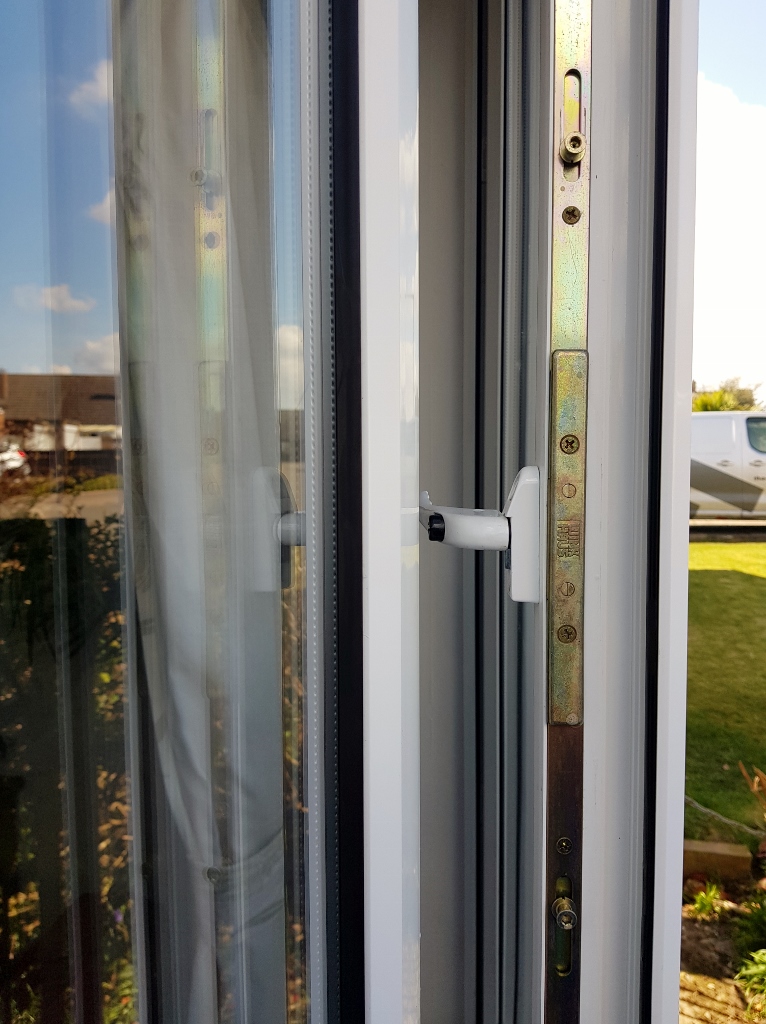
It’s easy to focus on doors, but remember to check and, if necessary, change locks on windows, garages, sheds, and side gates. These entry points are just as important for your overall security. A comprehensive approach ensures no weak links in your home’s defenses. When you move in, check all windows have a lock and key and that they operate correctly. Getting everything done in one go will save the cost of repeat visits in the future.
Wndow shuts & mechanism cleaned & serviced
Final Thoughts
In the whirlwind of moving house, changing the locks might seem like a small detail, but it’s one of the simplest and most effective ways to protect your loved ones and your possessions. By making this a priority, you’ll be able to enjoy your new home safe in the knowledge that you’re in control of who comes and goes.
After all, home is where you should always feel secure. Don’t leave it to chance—change your locks and start your new adventure the right way.
Changing Locks When You Move – and why it’s important
Securing Your New Beginning
Moving into a new home is an exciting experience, filled with possibilities and the fresh promise of a new start. Amidst the bustle of packing, unpacking, and redecorating, one critical step is often overlooked: changing the locks on your new property. While it may seem like a minor detail, changing the locks & updating them is an essential measure for protecting your home, belongings, and loved ones.
Why Changing Locks Matters
When you take ownership of a new home—be it a flat, house, or even a let property—you can never be entirely certain how many sets of keys are in circulation. Previous owners, tenants, estate agents, cleaners, builders, and even neighbours might still have a copy. By changing the locks, you establish control and peace of mind, knowing exactly who has access to your property.
Protecting Your Family and Belongings
Your new home is likely filled with personal possessions, treasured items, and, most importantly, the people you care about. Failing to change the locks leaves you vulnerable to uninvited guests. Burglaries and unauthorised entries are often crimes of opportunity; ensuring your locks are unique to you greatly reduces the risk.
Meeting Insurance Requirements
Many insurance policies require evidence that the property has secure locks, and some may void claims if it’s discovered you did not change them after moving in. By updating your locks, you not only strengthen your home’s defences but also ensure you’re meeting the terms and conditions of your insurer—potentially saving you a headache should you ever need to make a claim.
Peace of Mind
There’s no substitute for the peace of mind that comes from knowing your home is secure. Sleeping soundly in your new surroundings is easier when you know you’ve taken proactive steps to protect your household. It’s a simple one-off task that can save you worry and stress down the line.
Don’t Forget Internal and Outbuildings
While the front and back doors are obvious priorities, don’t overlook other access points. Garages, sheds, garden gates, and even internal doors may also require updated locks—particularly if they provide access to valuables or private areas.
How to Change Your Locks
Contact a reputable locksmith who is approved by a recognised trade association.
Consider upgrading to more secure lock types, such as anti-snap cylinders or smart locks.
Retain control of all new keys, and only provide copies to trusted individuals.
Dispose of old keys securely to prevent them falling into the wrong hands.
Conclusion
Changing the locks is a simple, affordable step that makes a world of difference to your home security. As you settle into your new home, make lock replacement a top priority—it’s a small investment in your safety, comfort, and peace of mind. After all, your new chapter deserves to start on the right foot: safe, secure, and truly yours.
No, I’m not talking about locks linked to your smart speaker. As world events make everything more expensive I’m talking about ways to shop smart. I thought this as recently I upgraded the security on a home in a local new build estate. Soon, I had a neighbour asking on recommendation for the same upgrade. That turned into five properties, all occupied by people who knew each other. For me, it was multiple journeys to the same area, multiple measuring visits, multiple ordering from my supplier and multiple deliveries. Had these people clubbed together, I could have done all the work in one day. I would have measured up all the properties on the same day beforehand, thus saving myself costs that I would have passed on to the customer. Those customers could have saved themselves £50 each by clubbing together on the labour charge.
Home security is important, but like everything else, the cost is rising. So if you are thinking of upgrading your locks, putting in some CCTV or an alarm, talk to your friends, If they are local, I will happily split a labour fee between you if it means I save on massive fuel bills. I will visit both your homes (or more) for free security checks, tailor the hardware recommendations personally and then when the work is done, split the labour cost evenly between you.
What about giving security as a gift? We all know a relative that might have outdated locks, don’t we? Well, why not club together with family members and buy them a security upgrade? (It could make a nice change from pants and socks or bathroom smellies.) You would be getting them something they would be using every day for a long time to come. On my rounds, I see so many older folk struggling with doors that have floppy handles or need a ‘knack’ to make the key work. Next time you visit Mum and Dad, plan something worthwhile for their next birthday or Christmas.
And just in case you were wandering how far this locksmith will travel, I am happy to come to you in North Walsham, Aylsham, Fakenham, Cromer, Stalham, and all the places in between. I even venture into Norwich.
My security checks are always free and there is never an obligation to take up my quote. 1st homes or 2nd homes, holiday lets or commercial properties, your security is my business.
There seems to be a massive drive to build new homes lately. Almost everywhere you go, you are bound to be driving past a new build construction site. You might even be looking at a nice newly built home in your area, or even bought one. The beauty of a new home over an older one is that you can move in knowing you have nothing to do. The carpets are already fitted to your criteria, the sparkly kitchen gleams and there is no worry that some random neighbour has a spare key to your home, so why are we advising changing the locks on a brand new property?
Why change the locks?
Quite frankly, the developers will do the minimum possible to meet regulations, and currently in the UK the regulations just are not up to the same level as the burglars. New homes are all being built with multi-point locking mechanisms and while all the hooks, bolts and rollers look impressive and secure, the system is only as good as its’ weakest part, which is the locking cylinder. While standard locking Euro Cylinders are acceptable for insurance purposes, they are incredibly weak to a form of attack called ‘cylinder snapping’. Property developers will use these standard cylinders wherever possible.
Some of the more reputable developers will at least have the decency to install kite marked Euro cylinders in their doors, but beyond the kite mark, there are still three grades of security, which cover the three main forms of attack, those being snap, pick and drilling. So a cylinder with one star will be proof against picking but not the other two, and a cylinder with two stars will still be susceptible to attack by one of the three main methods. You can supplement the star rating by having anti-snap collars placed inside the handles, or anti-drill handles. You may even have these, but if you don’t know, then the burglar doesn’t know either and he is likely to have a go, fail and leave your door a mess before he leaves. Only a three star cylinder should be used if you want the burglar to go away before even trying.
With total honesty, there is a tool that can be purchased to bypass even some of the best three star cylinders, but it takes time use and is fiddly. Entry with this tool is trial and error, sometimes taking many minutes to get in the door, whereas a standard cylinder can be snapped in under 60 seconds with household tools and no sound. For the same reason a burglar will not take the time to remove your roof tiles and enter that way, he will not purchase a tool that takes him many times longer to get in than the cheap tools he can get from a DIY store.
Cylinder snapping is no longer about normal burglary any more; Intruders know that most people leave their car keys somewhere in the vicinity of the front door, be they left on a surface, hanging on a convenient hook, or just in a coat pocket. They can now look for the car they want to steal parked nicely on your front drive. As most of us are now two car families, at least one will sit on the drive, and if that car is your brand new Mercedes or BMW and you keep your keys close to an easily attacked door, your insurance might decide not to pay out because you didn’t take enough care. How many people tell their insurance the car is kept in the garage, knowing that actually the garage is full of the toot we don’t want in our actual houses? Breaking into a house and stealing the keys is now the easiest way to steal their car.
And while a barking dog is a deterrent to some degree, what protects your home when you are on holiday or even out walking that dog?
Most three star Euro cylinders are visibly different to standard cylinders. They shout at the burglar you are serious about home security and that attacking your home is going to be noisy and time consuming. Noise and time are the enemy of the burglar. If he knows breaking into your home is going to be noisy and take up precious time, he is going to move on. If you fit the proper cylinders, chances are you will be angry with the locksmith after years and years of never seeing any signs of attack. You will never know how many intruders scouted your home and mentally noted to leave you alone. It’s not hard. I help my kids with their paper round, and the best locks stick out like a sore thumb. I know exactly how few there are and where they are. A potential intruder only has to deliver some bogus leaflets in any area to work out who is best avoided.
While on this subject, an emailed question asked if it worth putting extra strength glue in an externally beaded window so that if the burglar got the beading off the window would still be stuck in place. Beading removal was never a hugely popular method of attack. There was always too much potential to make noise and take a long time. Also, the risk of breaking glass and then cutting oneself is too high, even without extra glues. Cylinder snapping is quick, quiet and easy. So faced with a choice, you should always upgrade your cylinders.
If you have standard cylinders or even kite marked one star cylinders, you should upgrade now. If you don’t know what you have, a good locksmith in your area will come and assess your locks via a free security check. Unless a locksmith has provided your locks, I very much doubt they will be the best on the market. You cannot buy the best locks in the DIY shops. While you are ensuring you have the best locks, you should be sending a copy of this information to everyone you care about, because of the following reasons:
Burglary is on the rise.
Traditionally ‘safe’ areas are being burgled more often.
Only a tiny fraction of burglaries get investigated by police.
You are now at risk from car thieves as well.
Burglars pass on information to each other, so if you are burgled once, you stand an increased chance of being hit again.
Every person I speak to who has experience a burglary, reports feeling of personal violation, sleepless nights and detachment from their home.
If you have any questions regarding the above information or any of the other blogs I have written, please get in touch via any of the methods on my contacts page.
Thanks for reading.
New build Holt, New build Fakenham, New build Aylsham, New build Cromer,
New build North Walsham, New Build Norfolk, Locks Holt, Locks Fakenham,
Locks Aylsham, Locks Cromer, Locks North Walsham, Locks Norfolk