When I first started locksmithing, if you wanted a new lock, you had a choice of brass/gold, chrome and polished chrome. If you wanted an antique look, there were black hammered wrought iron, but little else.
Over the years there has been little movement in those choices. Traditional mortice locks Often called “Chubb” locks have started to be replaced by locking cases with cylinder locks, but these have all had a more modern feel to them. A rural cottage looks a bit odd with a modern looking handle, and I never liked the black handle with brass cylinder combination.
But now, no more boring locks – there are a range of new colour cylinders that offer more choice. From black to antique brass, these open the way for more stylish handles.
You can even get them in thumb turns and they are kite marked so comply with your home insurance requirements.
If you want, you can also have pewter, but these are a bit more of a premium price right now.
Also, no more boring handles like this.
Say hello to handles that are noticed when people come to your door. Handles that make a great first impression….
Or that you live in regency France!
If you would like a free consultation on styles and costs with no obligation, please contact me.
The Importance of Changing Locks When You Move House
Why Replacing Your Locks Should Be a Top Priority After Relocating
Moving House? Don’t Forget to Change Your Locks
Moving into a new home is an exciting time, marked by new beginnings and fresh opportunities. Amidst the flurry of unpacking boxes, decorating rooms, and meeting new neighbours, one crucial task often slips down the to-do list: changing the locks on your new property. While it might seem like a minor detail, replacing the locks is a vital step in ensuring your family’s safety and peace of mind.
Security Starts at the Door
When you receive the keys to your new house, you can’t be certain how many copies exist or who might still have access. Previous owners, tenants, estate agents, cleaners, or even tradespeople could have keys that open your doors. By changing the locks, you take control of your home’s security from the very start, ensuring that only those you trust have access. I have lost count of the times that workers doing long jobs like extensions or renovations, lose keys. If you hand your key over to a tradesperson for an extended period, you simply don’t know if they or one of their employees makes a copy. Always give them a key to a minor use door if possible and change the lock once they have finished the work.
Peace of Mind for Your New Chapter
There’s nothing quite like the reassurance of knowing you’re the only keyholder. Changing the locks eliminates any risk of unwanted visitors and allows you to settle into your new home with confidence. The last thing you want during your first night in a new place is uncertainty over who might be able to let themselves in unannounced. I have actually known this to happen. After six months in their new house, a couple came home to find a neighbour looking around. The neighbour explained she had a key from the previous owner and was concerned because she had been watching the new owners and they had not returned at their normal time.
Insurance and Legal Considerations
Many home insurance policies require evidence of forced entry to cover burglary claims. If a break-in occurs and the thief uses an old key, you may find yourself ineligible for compensation. By replacing the locks, you not only protect your belongings but also ensure your insurance remains valid and effective. There are also an incredible number of older properties that simply do not have insurance rated locks. It is always best to seek professional advice. Many people confuse the locking mechanism on a upvc door for a 5 lever lock as stated in insurance policies.
When Should You Change Locks?
Ideally, locks should be changed as soon as you move in – before you start bringing in valuables or spending the night. If you’re renting, check with your landlord about replacing the locks, and ensure you comply with the tenancy agreement. For homeowners, it’s a straightforward process that can often be done in a single afternoon. As a tenant, it is worth offering to pay for new locks if the landlord won’t do it. Legally, they don’t have to, but morally your landlord should change the locks for you. This is an allowable expense, so no-one loses out. If you are a home buyer and intend to have work done quite quickly, either leave the lock changing until after the work is done or ask your local locksmith if they have some 2nd hand locks that can go in temporarily before the main change further down the line.
Professional Help or DIY?
While some may feel comfortable changing locks themselves, hiring a professional locksmith guarantees the job is done correctly and to a high standard. A reputable locksmith can also advise on upgrading to more secure or modern locking systems, offering an added layer of protection against break-ins. You might want to discuss smart locks or just get some advice.
Don’t Overlook Windows and Outbuildings
It’s easy to focus on doors, but remember to check and, if necessary, change locks on windows, garages, sheds, and side gates. These entry points are just as important for your overall security. A comprehensive approach ensures no weak links in your home’s defenses. When you move in, check all windows have a lock and key and that they operate correctly. Getting everything done in one go will save the cost of repeat visits in the future.
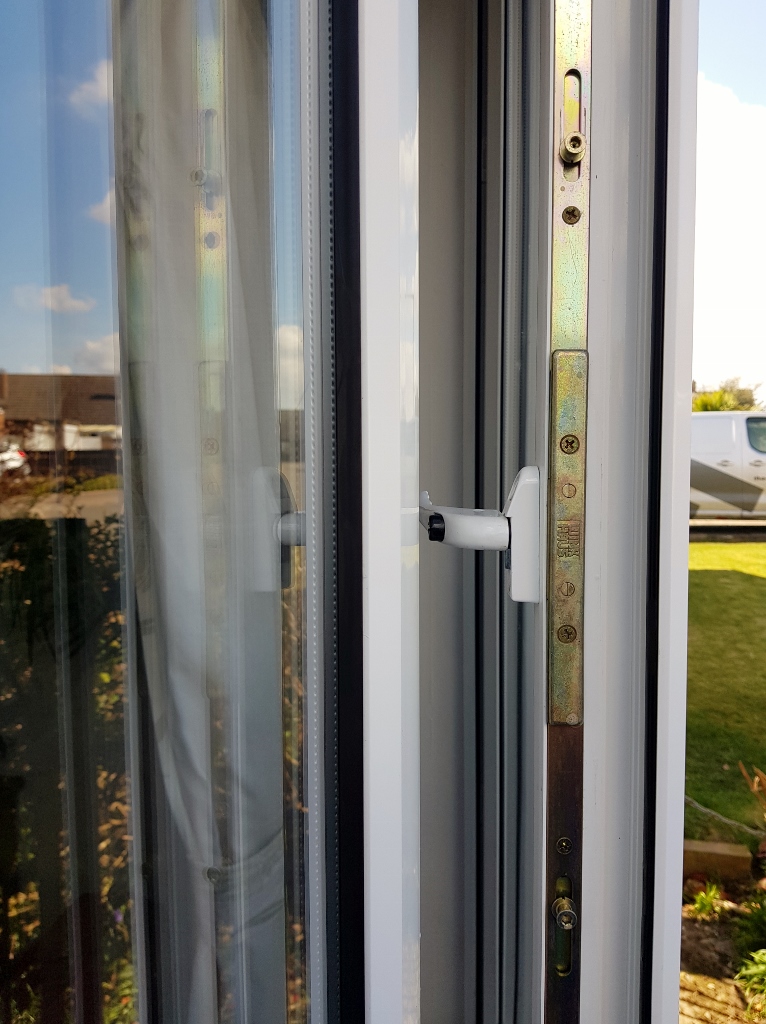
Wndow shuts & mechanism cleaned & serviced
Final Thoughts
In the whirlwind of moving house, changing the locks might seem like a small detail, but it’s one of the simplest and most effective ways to protect your loved ones and your possessions. By making this a priority, you’ll be able to enjoy your new home safe in the knowledge that you’re in control of who comes and goes.
After all, home is where you should always feel secure. Don’t leave it to chance—change your locks and start your new adventure the right way.
(OK, maybe not THE perfect Christmas present – but definitely something to think about!)
Practical, Thoughtful, and Full of Meaning
When it comes to choosing the perfect Christmas present, most of us find ourselves stuck between the latest gadgets, novelty jumpers, or a box of classic chocolates. But sometimes, the most memorable gifts are the ones we least expect. This year, why not consider breaking tradition and giving the gift of security, privacy, and peace of mind? Here’s why a lock could be the perfect Christmas present for your loved ones.
1. A Symbol of Security and Care
Christmas is all about showing the people in your life that you care. Gifting a lock—whether for a home, bicycle, locker, or suitcase—reflects your concern for their safety and well-being. It’s a gesture that quietly says, “I want you and your belongings to be safe,” and that’s a sentiment that will be appreciated long after the festivities are over.
2. A Practical Present They’ll Actually Use
Let’s be honest: how many presents end up collecting dust in a drawer by January? Unlike some novelty gifts, a lock is something people actually need. From safeguarding bikes on the daily commute to securing precious memories in a diary or jewellery box, a good lock is the gift that keeps on giving. With so many styles available—padlocks, smart locks, combination locks—there’s one to suit everyone’s needs.
3. Suitable for All Ages and Lifestyles
Locks are versatile gifts for all generations. Children might need a sturdy padlock for their school locker, while teenagers could use a lock for their gym bag. Adults will appreciate a reliable bike or door lock, and seasoned travellers will love a TSA-approved luggage lock. No matter the age or lifestyle, everyone has something worth protecting.
4. Encourages Good Habits
Giving a lock as a present isn’t just about the item itself—it’s about encouraging responsibility and good habits. For children and teens, it’s a gentle nudge towards looking after their possessions. For adults, it can be a timely reminder to update security, whether at home or on the move.
5. Personalisation Adds That Special Touch
Locks may seem utilitarian, but they can also be deeply personal. Many locks can be engraved with a name, a special date, or a message. Imagine the delight of receiving a padlock with a heartfelt engraving, perhaps to commemorate a special Christmas or a new home. It transforms a simple object into a keepsake.
6. Affordable Yet Meaningful
The festive season is not just about grand gestures; it’s the thought that counts. Locks are typically affordable, making them a brilliant choice for stocking fillers or Secret Santa gifts. Yet, their meaning runs deeper than their price tag, offering both practicality and sentiment in one neat package.
7. A Nod to Tradition (With a Modern Twist)
In some cultures, locks are exchanged as tokens of love and longevity—think of couples attaching padlocks to bridges as symbols of enduring affection. Gifting a lock this Christmas gives a nod to those traditions, while also embracing the latest in security technology, from fingerprint padlocks to smart door locks.
Conclusion
So, if you’re on the hunt for a Christmas present that’s practical, meaningful, and sure to be appreciated, look no further than a lock. It’s a gift that says “I care,” and offers peace of mind all year round. After all, isn’t that what Christmas is all about?
There seems to be a massive drive to build new homes lately. Almost everywhere you go, you are bound to be driving past a new build construction site. You might even be looking at a nice newly built home in your area, or even bought one. The beauty of a new home over an older one is that you can move in knowing you have nothing to do. The carpets are already fitted to your criteria, the sparkly kitchen gleams and there is no worry that some random neighbour has a spare key to your home, so why are we advising changing the locks on a brand new property?
Why change the locks?
Quite frankly, the developers will do the minimum possible to meet regulations, and currently in the UK the regulations just are not up to the same level as the burglars. New homes are all being built with multi-point locking mechanisms and while all the hooks, bolts and rollers look impressive and secure, the system is only as good as its’ weakest part, which is the locking cylinder. While standard locking Euro Cylinders are acceptable for insurance purposes, they are incredibly weak to a form of attack called ‘cylinder snapping’. Property developers will use these standard cylinders wherever possible.
Some of the more reputable developers will at least have the decency to install kite marked Euro cylinders in their doors, but beyond the kite mark, there are still three grades of security, which cover the three main forms of attack, those being snap, pick and drilling. So a cylinder with one star will be proof against picking but not the other two, and a cylinder with two stars will still be susceptible to attack by one of the three main methods. You can supplement the star rating by having anti-snap collars placed inside the handles, or anti-drill handles. You may even have these, but if you don’t know, then the burglar doesn’t know either and he is likely to have a go, fail and leave your door a mess before he leaves. Only a three star cylinder should be used if you want the burglar to go away before even trying.
With total honesty, there is a tool that can be purchased to bypass even some of the best three star cylinders, but it takes time use and is fiddly. Entry with this tool is trial and error, sometimes taking many minutes to get in the door, whereas a standard cylinder can be snapped in under 60 seconds with household tools and no sound. For the same reason a burglar will not take the time to remove your roof tiles and enter that way, he will not purchase a tool that takes him many times longer to get in than the cheap tools he can get from a DIY store.
Cylinder snapping is no longer about normal burglary any more; Intruders know that most people leave their car keys somewhere in the vicinity of the front door, be they left on a surface, hanging on a convenient hook, or just in a coat pocket. They can now look for the car they want to steal parked nicely on your front drive. As most of us are now two car families, at least one will sit on the drive, and if that car is your brand new Mercedes or BMW and you keep your keys close to an easily attacked door, your insurance might decide not to pay out because you didn’t take enough care. How many people tell their insurance the car is kept in the garage, knowing that actually the garage is full of the toot we don’t want in our actual houses? Breaking into a house and stealing the keys is now the easiest way to steal their car.
And while a barking dog is a deterrent to some degree, what protects your home when you are on holiday or even out walking that dog?
Most three star Euro cylinders are visibly different to standard cylinders. They shout at the burglar you are serious about home security and that attacking your home is going to be noisy and time consuming. Noise and time are the enemy of the burglar. If he knows breaking into your home is going to be noisy and take up precious time, he is going to move on. If you fit the proper cylinders, chances are you will be angry with the locksmith after years and years of never seeing any signs of attack. You will never know how many intruders scouted your home and mentally noted to leave you alone. It’s not hard. I help my kids with their paper round, and the best locks stick out like a sore thumb. I know exactly how few there are and where they are. A potential intruder only has to deliver some bogus leaflets in any area to work out who is best avoided.
While on this subject, an emailed question asked if it worth putting extra strength glue in an externally beaded window so that if the burglar got the beading off the window would still be stuck in place. Beading removal was never a hugely popular method of attack. There was always too much potential to make noise and take a long time. Also, the risk of breaking glass and then cutting oneself is too high, even without extra glues. Cylinder snapping is quick, quiet and easy. So faced with a choice, you should always upgrade your cylinders.
If you have standard cylinders or even kite marked one star cylinders, you should upgrade now. If you don’t know what you have, a good locksmith in your area will come and assess your locks via a free security check. Unless a locksmith has provided your locks, I very much doubt they will be the best on the market. You cannot buy the best locks in the DIY shops. While you are ensuring you have the best locks, you should be sending a copy of this information to everyone you care about, because of the following reasons:
Burglary is on the rise.
Traditionally ‘safe’ areas are being burgled more often.
Only a tiny fraction of burglaries get investigated by police.
You are now at risk from car thieves as well.
Burglars pass on information to each other, so if you are burgled once, you stand an increased chance of being hit again.
Every person I speak to who has experience a burglary, reports feeling of personal violation, sleepless nights and detachment from their home.
If you have any questions regarding the above information or any of the other blogs I have written, please get in touch via any of the methods on my contacts page.
Thanks for reading.
New build Holt, New build Fakenham, New build Aylsham, New build Cromer,
New build North Walsham, New Build Norfolk, Locks Holt, Locks Fakenham,
Locks Aylsham, Locks Cromer, Locks North Walsham, Locks Norfolk
There seems to be a massive drive to build new homes lately. Almost everywhere you go, you are bound to be driving past a new build construction site. You might even be looking at a nice newly built home in your area. The beauty of a new home over an older one is that you can move in knowing you have nothing to do. The carpets are already fitted to your criteria, the sparkly kitchen gleams and there is no worry that some random neighbour has a spare key to your home.
So why change the locks? Quite frankly, the developers will do the minimum possible to meet regulations, and currently, in the UK the regulations just are not up to the same level as the burglars. New homes are all being built with multipoint locking mechanisms and while all the hooks, bolts and rollers look impressive and secure, the system is only as good as its’ weakest part, which is the locking cylinder. While standard locking Euro Cylinders are acceptable for insurance purposes, they are incredibly weak to a form of attack called “cylinder snapping.” Property developers will use these standard cylinders wherever possible.
Some of the more reputable developers will at least have the decency to install kite marked Euro cylinders in their doors, but beyond the kite mark, there are still three grades of security, which cover the three main forms of attack, those being snap, pick and drilling. So a cylinder with one star will be proof against picking but not the other two, and a cylinder with two stars will still be susceptible to attack by one of the three main methods. You can supplement the star rating by having anti-snap collars placed inside the handles, or anti-drill handles. You may even have these, but if you don’t know, then the burglar doesn’t know either and he is likely to have a go, fail and leave your door a mess before he leaves. Only a three-star cylinder should be used if you want the burglar to go away before even trying.
With total honesty, there is a tool that can be purchased to bypass even some of the best three-star cylinders, but it takes time to use and is fiddly. Entry with this tool is trial and error, sometimes taking many minutes to get in the door, whereas a standard cylinder can be snapped in under 60 seconds with household tools and no sound. For the same reason, a burglar will not take the time to remove your roof tiles and enter that way, he will not purchase a tool that takes him many times longer to get in than the cheap tools he can get from a DIY store.
Cylinder snapping is no longer about normal burglary any more. Intruders know that most people leave their car keys somewhere in the vicinity of the front door, be they left on a surface, hanging on a convenient hook, or just in a coat pocket. They can now look for the car they want to steal parked nicely on your front drive. As most of us are now two-car families, at least one will sit on the drive, and if that car is your brand new Mercedes or BMW and you keep your keys close to an easily attacked door, your insurance might decide not to pay out because you didn’t take enough care. How many people tell their insurance the car is kept in the garage, knowing that actually, the garage is full of the toot we don’t want in our actual houses? Breaking into a house and stealing the keys is now the easiest way to steal their car.
And while a barking dog is a deterrent to some degree, what protects your home when you are on holiday or even out walking that dog?
Most three-star Euro cylinders are visibly different to standard cylinders. They shout at the burglar you are serious about home security and that attacking your home is going to be noisy and time-consuming. Noise and time are the enemy of the burglar. If he knows breaking into your home is going to be noisy and take up precious time, he is going to move on. If you fit the proper cylinders, chances are you will be angry with the locksmith after years and years of never seeing any signs of attack. You will never know how many intruders scouted your home and mentally noted to leave you alone. It’s not hard. I help my kids with their paper round, and the best locks stick out like a sore thumb. I know exactly how few there are and where they are. A potential intruder only has to deliver some bogus leaflets in any area to work out who is best avoided.
While on this subject, I was emailed a question asking if it is worth putting extra strength glue in an externally beaded window so that if the burglar got the beading off the window would still be stuck in place. Beading removal was never a hugely popular method of attack. There was always too much potential to make noise and take a long time. Also, the risk of breaking glass and then cutting oneself is too high, even without extra glues. Cylinder snapping is quick, quiet and easy. So faced with a choice, you should always upgrade your cylinders.
If you have standard cylinders or even kite marked one-star cylinders, you should upgrade now. If you don’t know what you have, a good locksmith in your area will come and assess your locks via a free security check. Unless a locksmith has provided your locks, I very much doubt they will be the best on the market. You cannot buy the best locks in the DIY shops. While you are ensuring you have the best locks, you should be sending a copy of this information to everyone you care about, because of the following reasons:
* Burglary is on the rise.
* Traditionally ‘safe’ areas are being burgled more often.
* Only a tiny fraction of burglaries get investigated by police.
* You are now at risk from car thieves as well.
* Burglars pass on information to each other, so if you are burgled once, you stand an increased chance of being hit again.
* Every victim I speak to, reports a feeling of personal violation, sleepless nights and detachment from their home.
If you have any questions regarding the above information or any of the other blogs I have written, please get in touch via any of the methods on my contacts page.